Travelling with a Wheelchair
Morocco Wheelchair Travel with a Private Driver
The Honest Answer
What Our Vehicles Can and Cannot Do
Better to know now than on the morning of your pickup.
Standard vehicles
We drive a Toyota Prado, a Ford Tourneo and a Volkswagen Crafter. None of them is adapted: no ramp, no lift and no wheelchair restraints.
A folding chair in the boot
A folding manual wheelchair travels in the boot with the luggage, so it is ready at every stop, with no luggage supplement.
Who it suits
Travellers who can move from the wheelchair to a car seat, on their own or with help from a companion, such as people who use a chair for longer distances.
Who it does not suit
Anyone who needs to stay seated in their wheelchair while the vehicle moves. For that, a vehicle adapted with a ramp or lift is the safe choice.
Power chairs and scooters
Send us the folded size and weight before you book. We tell you honestly whether it fits in the boot alongside your luggage.
Door to door
Pickups at your hotel entrance. In car free medinas such as Fes, the drop off is the closest gate a vehicle can reach.
Easier and Harder
Easy and Hard Places for a Wheelchair
Morocco is uneven ground, and some places are far kinder than others.
| Place | Ground | What to expect |
|---|---|---|
| Agadir seafront | A wide, flat, paved promenade | The easiest long walk in the country, with cafés all along it |
| Hassan II Mosque, Casablanca | A huge paved esplanade | The esplanade and the ocean views are easy; ask at the ticket office about access inside |
| Hassan Tower, Rabat | A broad paved square | The tower and the Mausoleum of Mohammed V face each other across one open esplanade |
| Jardin Majorelle, Marrakech | Paved garden paths | One of the easier visits in Marrakech, though busy at peak times |
| Marrakech medina | Flat in places, crowded, shared with scooters and carts | Possible with a strong companion, and best early in the morning |
| Fes medina | Steep, narrow lanes with steps | Very hard in a wheelchair; the viewpoints above the city, reached by car, show it best |
| Chefchaouen and Ait Ben Haddou | Steep, stepped lanes | Enjoy them from the road and the riverbank rather than the lanes |
| Sahara camps | Soft sand | A wheelchair will not roll on dunes, so ask the camp about its paths before booking |
City pavements are often high, broken or blocked by parked cars and stalls, which is one reason a driver who stops right at the door makes such a difference.
Flying In
Airport Assistance on Arrival
Book the airline's assistance when you book your flight. On Royal Air Maroc's reduced mobility page, the national airline asks for requests at booking or at least 48 hours before departure, carries up to two mobility aids free of charge and, on arrival, accompanies passengers from the aircraft to their pick-up point. Most other airlines offer similar help on request.
That pick-up point is where we take over. Your driver waits in the arrivals hall with a sign bearing your name, handles the luggage and drives you to the door of your hotel. You receive the driver's phone number with the booking confirmation, so the airport assistance staff can call if your flight runs late.
Where to Stay
Riads, Hotels and Rooms
Riads are beautiful but tricky. These traditional houses are built around a courtyard, often with a step at the door, narrow staircases and no lift. If you love the idea, ask for a ground floor room and photos of the bathroom before you book.
Modern hotels are usually easier. Larger hotels in Casablanca, Rabat, Agadir and the newer districts of Marrakech more often have lifts and adapted rooms. Ask specifically about step free entrances, door widths and a roll-in shower, because labels vary from one hotel to the next.
Check access before anyone books. We can book hotels and riads for you, or you can book them yourself, and either way the access details are worth confirming with each hotel first. When you enquire we share our shortlist for each town on your route.
Planning
How We Plan a Trip with a Wheelchair
Four questions that shape the route.
Tell us about the chair
Folding manual or powered, and its folded size and weight if it is large. We choose a vehicle with room for the chair and all the luggage.
Tell us about transfers
How you move from the chair to a seat, and who travels with you. It decides how long each stop takes and how many stops a day suit you.
Pick sights with the right ground
We lean on the easier places, such as esplanades, gardens and seafronts, and suggest viewpoints in place of steep lanes.
Set a gentle pace
Our drivers keep to 8 hours or 300 km of driving a day, shorter days are easy to arrange, and stops on request cost nothing extra.
Easier Sights
Places That Work Well
Open, paved and full of things to see.
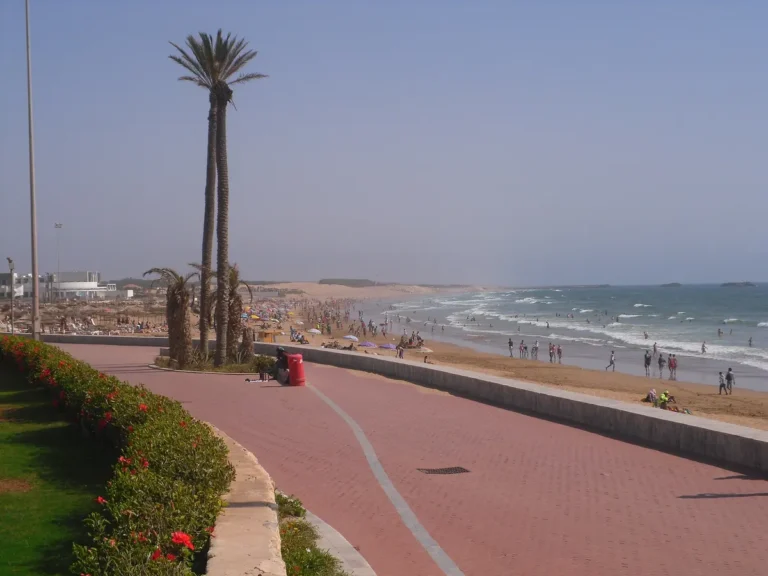
Agadir promenade
A wide, flat walk beside the beach.

Hassan II Mosque
The minaret above the paved esplanade and the Atlantic.
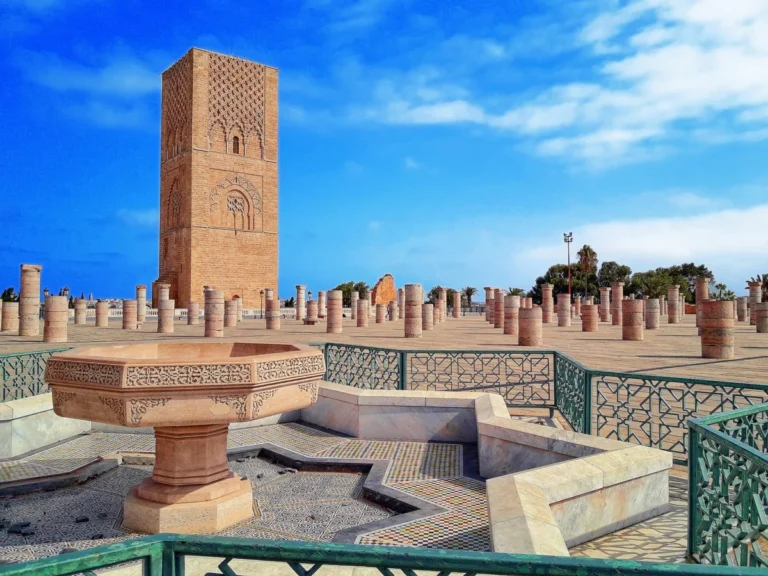
Hassan Tower, Rabat
An open square of stone columns.
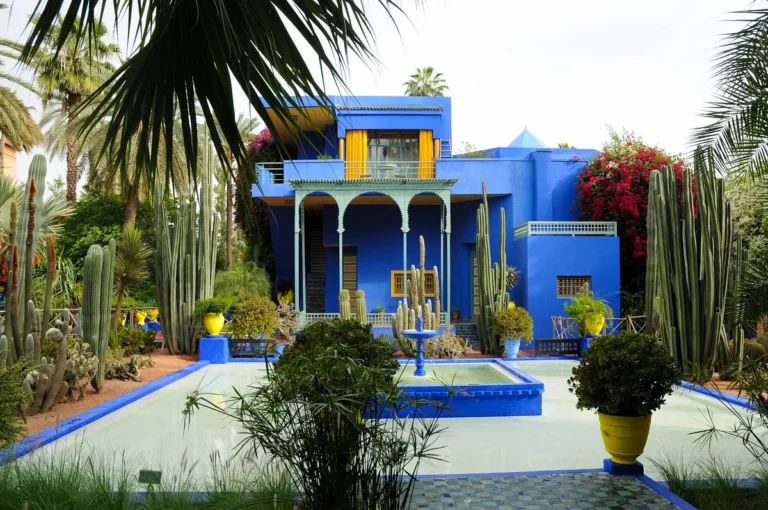
Jardin Majorelle
Paved paths and the blue villa in Marrakech.

Mohammed V Square
A flat square in central Casablanca.
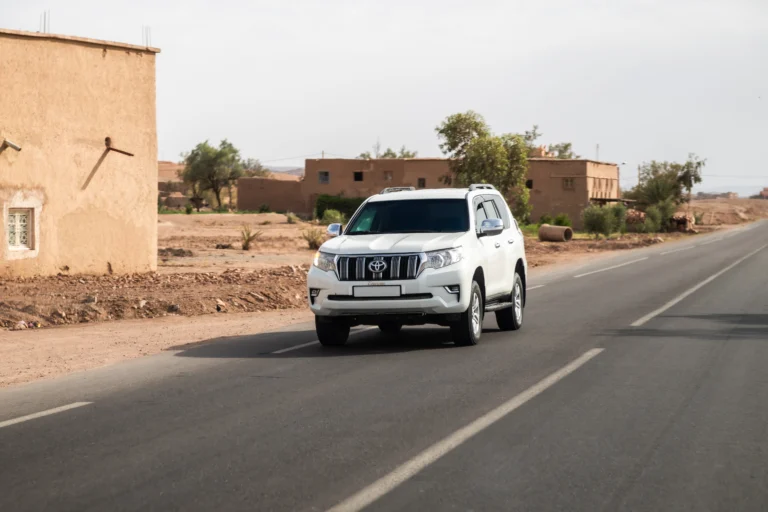
Toyota Prado
One of our standard, non adapted vehicles.
Photos via Wikimedia Commons. Agadir promenade: Elmschrat, CC BY-SA 3.0 · Hassan II Mosque: Milamber's portfolio, CC BY 2.0 · Hassan Tower, Rabat: OHamama, CC BY-SA 4.0 · Jardin Majorelle: Viault, CC BY-SA 4.0 · Mohammed V Square: Sharon Hahn Darlin, CC BY 2.0
Related
More to Help You Plan
Questions
Morocco Wheelchair Travel, FAQ
Are your vehicles wheelchair accessible?
No. Our Toyota Prado, Ford Tourneo and Volkswagen Crafter are standard vehicles with no ramp or lift, so nobody can travel seated in a wheelchair. A folding wheelchair travels in the boot, which suits travellers who can move to a car seat.
Can I bring my own wheelchair?
Yes. A folding manual wheelchair goes in the boot with your luggage at no extra cost. For a power chair or a mobility scooter, send us its folded size and weight first so we can check that it fits.
Which Moroccan cities are easiest with a wheelchair?
The newer, flatter places: Agadir with its seafront promenade, and Casablanca and Rabat with their wide esplanades. The old medinas of Fes and Chefchaouen are the hardest, with steep lanes and steps.
Will our driver meet us at the airport?
Yes. Your driver waits in the arrivals hall with a sign bearing your name. Book the airline's assistance as well, which usually brings you from the aircraft to the arrivals hall or the pick-up point.
Can a companion or carer travel with us?
Yes. Prices are per vehicle, not per person, so a companion adds nothing to the fare as long as the vehicle has a free seat.
Can we visit the Sahara with a wheelchair?
The desert camps sit on soft sand, where a wheelchair will not roll. The camel is optional and the 4x4 can take you to the camp, but the paths inside are sand too, so ask the camp about its layout before you book.
Plan a Trip That Fits
Tell us about the wheelchair, how you move to a seat and where you would like to go. We reply honestly about what works, with a route and a fixed price per vehicle.
Plan the rest of the trip